Posted by Jack Valentine on Thu, Feb 04, 2010 @ 05:02 PM
Fame isn't cheap.
According to the Advertising Age trade journal, celebrities such as Britney Spears pay $25,000 to the Hollywood Chamber of Commerce for the privilege of having their name emblazoned on the heralded Walk of Fame.
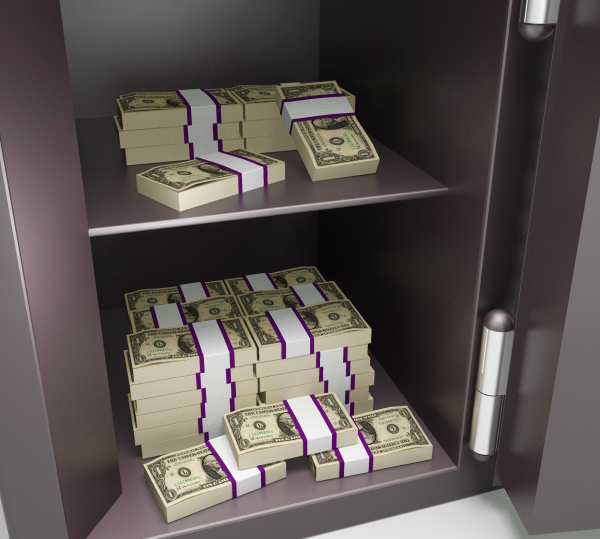
Now, in an effort to raise fast money during these crummy economic times, the Walk of Fame is offering a limited five stars to companies at a whopping $1,000,000 fee. L'Oreal cosmetics and Absolut Vodka bought the first two spots.
Imagine, a million bucks for the opportunity for millions of people to drag their muddy feet across your company logo. Marketers figure that they are not only getting seen by tons of tourists, but their product names are physically associated with consumers' favorite movie, television and music stars.
If you had a million dollars for a marketing campaign, you could buy the measley sidewalk star, or you could impress the heck out your clients with a promotional gift they will want to keep and will inevitably remind them of you.
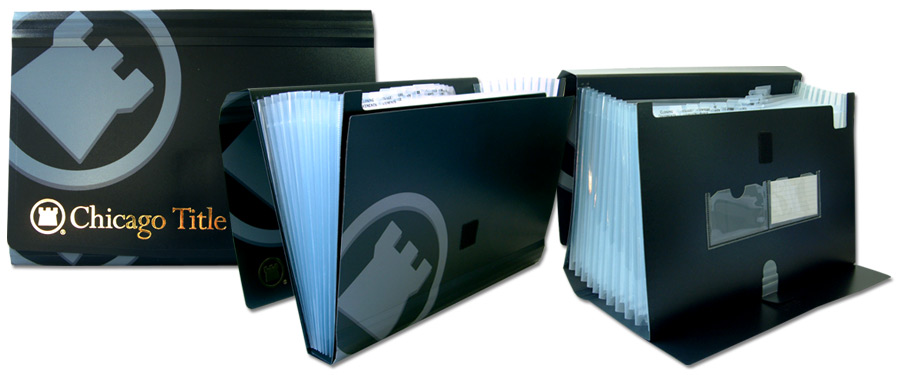
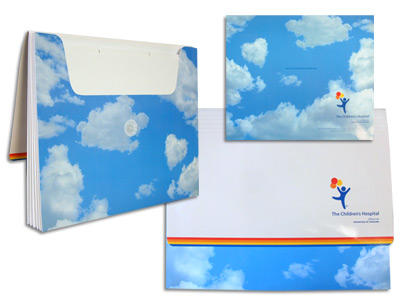
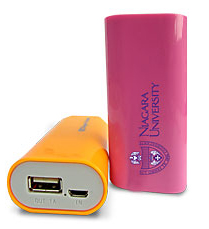
Look what one million bucks will buy you in customized printed items or promotional products:
Of course, you don't need to spend anywhere near that amount of money if you are targeting only a few hundred or even a few thousand employees or clients.
The other advantage over a Hollywood star (not that you are thinking about buying one) is that with promotional items, you get to strategically decide who gets the gift. Who do you want staring at your Website URL all year long when they look at their desk calendar or take a sip from their custom coffee mug?
You slap your logo on a sidewalk and likely 90 percent or more of the pedestrians just want to walk on you and aren't in the frame of mind for purchasing goods or services.
But if you are into the Hollywood lifestyle, we can print a gold star (with your name, too) on virtually any promotional product you wish!
Posted by Jack Valentine on Mon, Jan 11, 2010 @ 11:42 AM
With the possible exception of Google relying on brochure printing to advertise Google Ads, you don't get more ironic than this...
Twitter addicts are now choosing to permanently immortalize their tweets in an old-fashioned coffee table book. The publisher, TweetBookz.com, will capture your last 200 Twitter messages in the $30 hardcover books -- melodramatically including one Tweet per page as if it were a haiku or poetry book.
Emails, texting and Twitter have pretty much collectively slaughtered the art of the handwritten note. Meanwhile, the media is going bonkers over the Amazon Kindle, the so-called electronic book. Yet, people are seemingly yearning for the simplicity of a letter and the comfortable feel of a real book.
The TweetBookz make the Twitter feeds feel permanent because they are constantly visible, not shuffled away by the next infusion of Twittering babble.
The same principle applies to marketing and advertising your business. A snazzy, handsome printed brochure may sit on someone's desk for months, serving as a reminder to call you.
A branded desk pad calendar never stops subconsciously marketing 24/7/365. A branded presentation folder or document folder -- which serve a practical role of keeping your paperwork organized for the client -- will get stared at far longer than a Web site ad.
And get stared at much much longer than a fleeting Tweet!
Posted by Chris Higgins on Thu, Dec 31, 2009 @ 11:15 AM
I went to Autozone the other day to get some new wiper blades, while there picked up a five gallon bucket for $4.99. A few days later I was carrying the bucket to my local service station when I realized that I'd become a walking billboard for Autozone. The Autozone logo is printed around the entire outside of the bucket in their bright orange color, every person I pass carrying that bucket is exposed to the Autozone brand. The beauty of it for Autozone is that instead of paying me to market their product, I actually paid them.
We recently published an article about Jason Sadler and his company IWearYourShirt.com. He created the ideal job for himself, he gets company's to pay him for wearing a T shirt that promotes their brand. Granted he does a bit more than just wear the T shirt, he also blogs and tweets about the brand while wearing the T shirt, but the bottom line is they pay him to wear a T shirt and become a walking billboard. Autozone does the same thing with their five gallon buckets, the difference is I paid them to promote their brand.
I didn't think about it at the time, I needed a bucket and they had one. Marketing, advertising, and branding are about exposure and multiple impressions that create name recognition. What better way to create multiple impressions than to put your brand on products people use every day, and if you can actually get customers to pay for those products you might be able to change marketing from an expense to a profit center.
This is the beauty of promotional merchandise, promotional products, and printing for that matter, they are great ways to promote your brand and get your message in front of a targeted audience. If you give a customer a promotional mug, a personalized mouse pad, or even a well designed pocket folder, not only do you give them something they can and will use, but you're also promoting your brand to everyone they come in contact with.
Promoting your brand with everyday products that people actually use is like free advertising. You expose your message to everyone they come in contact with, and the longer your promotional merchandise is used the longer your message stays alive.
Posted by Jack Valentine on Wed, Dec 16, 2009 @ 08:45 PM
The above souvenir postcard is from the Classical Gardens of Suzhou, China, which is a United Nations World Heritage site. But take a closer look. It's not just a postcard.
The detachable yellow portion is an admission ticket.
The Chinese tourism bureau is a savvy marketing and branding machine.
Not only are they giving you a stylish souvenir for your vacation album, which will no doubt be shared with countless family and friends, but they are also making it easy for you -- tempting even -- to suggest this location to the next potential tourist.
Postcards are the ultimate promotional printing vehicle because people keep them FOREVER. Take a look at the collectible postcard listings on eBay. The most fascinating aspect is the desirability of advertising postcards -- ones that make no effort to camouflage themselves as collectible souvenirs.
Who would ever have imagined that a Texaco oil change postcard would last for almost 60 YEARS?!
A good advertising postcard only needs two elements:
1. An uncluttered, attractive image; and
2. A Call To Action.
The Chinese tourist postcard screams COME VISIT ME! And if it is sent from a friend, it has more word-of-mouth power than a billion brochures. The Texaco card, in a funny cartoon, reminds people they need to take care of their cars in the cold weather.
Using either a funny image or a gorgeous tourist picture (if your town or city has even a semi-famous attraction) can guarantee that your promotional postcard doesn't immediately wind up in the trash.
And using the Chinese garden model, if you attach a ticket/coupon, or include a discount offer printed on the back, you have your Call To Action.
These same principles apply to pocket folders and mini pocket folders used to give your customers information or their receipts. Give people a reason to keep your promotional business printing and they WILL keep it and they WILL think of you the next time they need your goods or services.
Now, back to the Texaco card, does anyone out there manufacture sweaters for cars? Seems like another golden business opportunity!
Posted by Jack Valentine on Thu, Dec 03, 2009 @ 06:01 PM
We're only human, so we feel no shame in admitting occasional jealousy.
We're a teeny bit jealous of 26-year-old Jason Sadler, who has pulled off the stunning career move of convincing businesses to PAY HIM to wear their t-shirts. If you pay his rate, Jason will pretty much wear pink Care Bears or ballerinas. His only rule is no profanity and nothing offensive or vulgar toward women or any ethnic/religious group.
He raked in $85,000 in salary and sponsorships this year -- just for wearing t-shirts and blogging, Twittering, YouTubing and Facebooking the heck out of the brands he promotes each day. You can read all about the clever insanity on his IWearYourShirt.com Web site.
Jason's success is a result of his personality and hard work, but it is also a testament to the value of promotional merchandise -- the power of the printed word. Jason is a human billboard. Everywhere he walks, even when he enters a public restroom, he is silently broadcasting his sponsor's message.
You can make this happen, too. On a rainy day, your bright-colored promotional umbrella will flash like a beacon in the fog. Your promotional coffee mug will serve as a constant reminder of your products or services, regardless if the mug is actually used for coffee or is repurposed as a pen and pencil holder. And your company's handsome document folders that package important papaers and documents will likely be kept for years to come.
Yes, printing is an expense. But even more so, it is a branding opportunity that may provide unexpected dividends. You never know who owns the set of eyeballs that cross paths with your logo and product slogan. Promotional merchandise is your opportunity to fill the world with Jason Sadlers -- all of them working for you!
Posted by Jack Valentine on Mon, Nov 23, 2009 @ 07:30 AM
It almost sounds like a joke: Google is now advertising its advertising.
And here's the punchline... The company is using brochure printing and direct mail, the very advertising medium that the Internet was supposed to make obsolete.
Although there are seemingly countless millions of people wired on-line 24/7, the reality is that even most of them spend more breathing moments off-line than on. Their lives are NOT totally virtual. And that means they make trips to their mailbox and make eye contact with what's inside.
In this printed tri fold brochure, Google is offering an incentive of $75-$100 in free advertising, depending on how early customers sign up. Putting a coupon on a brochure is a savvy move. Even if a prospective client is on the fence, giving them a concrete financial incentive sharply increases the likelihood that your brochure stays out of the trash.
This old-fashioned, color brochure contains Google website addresses to "click on," but of course none of them are hyperlinked. At least for now, technology doesn't exist to wirelessly transmit signals from a piece of paper. Yet, Google is tacitly acknowledging that brochure printing is still a major part of any serious marketing campaign.
Or as we put it in the first question on our home page, "CAN A PIECE OF PAPER CREATE MORE SALES FOR YOU?"
Absolutely. Brochure printing is effective marketing. Brochure printing is effective branding. Brochure printing is effective advertising, a bold call to action.
We certainly don't suggest abandoning the Internet as an advertising medium -- heck, we use it with fantastic results. But go ahead and follow Google's lead. Embrace print, too!
Posted by Jack Valentine on Mon, Nov 16, 2009 @ 09:31 PM

The advertising giant BBDO West recently teamed up with Goodwill and Levi's to promote the message of recycling used clothing.
The suggestion to donate your jeans to Goodwill when you no longer want them (or maybe gain too much weight?!) appears just below the washing, drying and ironing instructions on the laundry tag.
Goodwill builds brand awareness while simultaneously aiming to reduce the estimated 23.8 billion pounds of clothing that annually gets tossed in the trash by Americans alone. By offering its tags for promotional advertising, Levis brands itself as a company that cares about the environment.
What's particularly brilliant about this advertising strategy is that it encounters the consumer at the point of his or her decision making. The message to recycle may even urge the jean owners to keep other materials out of the waste stream as well.
Promotional advertising is most effective when you have a captive audience, when your message is emblazoned across an item that your target audience uses in their everyday life.
Customized Business Envelopes aren't as sexy as Levi's jeans, but they are a golden opportunity to broadcast your brand when a consumer buys tickets to a concert or entertainment event. Mini pocket folders for gift certificates may include bonus coupons for a restaurant or any business.
And for real estate agents, attorneys and travel agents, snazzy-looking presentation folders that keep documents neat and orderly may just have a longer lifespan -- and advertising potential -- than the jeans you are wearing right now.
Posted by Jack Valentine on Wed, Nov 04, 2009 @ 12:05 PM
On Flickr, the popular photo-sharing Website, a Pittsburgh artist known as "Mleak" has done some remarkably innovative work with corporate logos. She's taken the unprecedented step of turning live insects into
promotional merchandise!
Mleak calls her work "parasitic advertising," and her intention is to release these branded insects back into the wild -- presumably to influence humans and other insects.
Astoundingly, the paint jobs are real and not some Photoshop trick. Here's the artist revealing her secret:
"Depending on the insect, I put it in the fridge for 5-15 minutes. They're cold-blooded, so that slows them down, though it only gives me a minute or two to work before they start reviving, so I usually have to put them in a few different times before I'm done."

Appropriately, the above work is called the "VW Beetle."
Obviously, Mleak does not make her promotional insects to advertise Fortune 500 companies. We're speculating that she's making some kind of artistic statement about the pervasiveness of corporations in our everyday lives. We also wonder if PETA or any other animal rights group has confronted her about her hobby.
Nonetheless, while parasitic advertising is cool and unusual, it's not an effective way for a company to promote their brand.
Can you imagine the response of customers who are approached with
logo-decorated insects? Depending on the breed, we think their first
instinct would be to pull out the can of bug spray.
Ideally, when you invest the money to put your logo in front of as many eyeballs as possible, you'll be better off if the medium is practical -- an everyday item people naturally use.
A pocket folder is a perfect vehicle for packaging corporate information, it's designed to your specifications, it presents the message you want to present, and it provides a professional, organized package for your collateral material.
Pocket folders are an effective way to present your message to a captive audience. They're perfect for mortgages, refinancing and other real estate/legal paperwork!
Wonder if Mleak's painting skills will eventually progress to the point where she can put your company logo on a mosquito?
In that light, here's one thing we promise you. Our pocket folders will never ever bite!
Posted by Jack Valentine on Thu, Oct 08, 2009 @ 08:59 PM

Print advertising is dead, they say. Conde Nast is closing magazines because of plummeting ad pages. Newspapers are shrinking into pamphlets, and quite frankly, it's a miracle there's even a physical phone book with Yellow Pages ads anymore.
Those mediums are genuinely struggling in an Internet World. But to paraphrase Mark Twain, reports of the death of print are greatly exaggerated.
People still LOVE freebies and promotional merchandise that you can give away to your clients, employees or customers is still one of the most effective ways to make your brand identity "sticky."
Check out the tattered antique Colgate calendar booklet pictured above. The toothpaste company, which arguably has one of the most recognizable consumer brands on the planet, found value in distributing advertising calendars back in 1902! Not only did the original owner hang on to this freebie (and be reminded of the Colgate name daily), but it survived 107 years to wind up on eBay!

Same idea with this vintage matchbook cover advertising cough drops. Never mind that smokers would have no need to soothe their throats or freshen their breath as often if they simply gave up tobacco. The point is that these matches were ultimately meant to be used and thrown away. But the time between the first flame and the last was wisely regarded as precious advertising time.
In effect, each cigarette break was "sponsored" by this cough drop company -- because it had the captive audience of the individual smoker.
These matches illustrate the most important principle in selecting which promotional item is best for your company. Promotional giveaways must be practical. They must be something that people will naturally want to keep AND use.
An Orlando hotel recently packaged their hotel key cards in a mini pocket folder that doubled as a colorful advertisement for the new Simpsons amusement park ride at Universal Studios. What a creative way to take advantage of a captive audience, sell advertising space on the promotional merchandise that is handed to every hotel guest. Many companies also take advantage of their captive audience by offering discount coupons for other services that can increase their revenue.
Think pragmatically. Who is NOT going to want to keep a promotional custom USB flash drive? If you are in the software industry or any e-commerce business, your most prized clients likely live in front of the computer screen and will think of you whenever they back up their files.
Even more pedestrian items, such as document folders, can become exciting giveaways if they fulfill a customer's needs. We've found that our attractive expandable accordion files are kept long after the original use. They're durable, practical and serve the evergreen purpose of organizing life's endless stream of paperwork.
Your company's promotional merchandise likely won't be an antique collectible on eBay in 50 years, but you'll be capturing those valuable eyeballs now.
And now is when you need them!
Posted by Chris Higgins on Mon, Jul 13, 2009 @ 09:58 PM
The cost of acquiring new customers, according to many surveys, runs 8 to 10 times more than the cost of keeping existing ones. That being the case taking small steps to remind clients of all the services your company provides is an effective use of marketing dollars.
Document folders given to a client after a transaction, are an effective and inexpensive way to promote and cross sell other products and services. Document folders can be used in many different ways, from presenting a neat and professional package to including a specific call to action. Look at a few simple ways companies use document folders to cross sell other products and services.
A credit union created unique, portfolio style document folders for mortgage clients. the folders remind and encourage mortgage clients to check out money market and Internet banking services.
An insurance company created accordion document folders to package life insurance policies, that highlighted an available discount for clients who combine both their auto and homeowners policies.
A hotel chain created document folders for the room keys that included a discount coupon for dinner in the hotel restaurant.
A bank created welcome kit document folders for new account holders that promoted their mortgages and investment services.
An appliance repair company created document folders that included a satisfaction survey and a discount coupon to be used on the next call.
A tour company created document folders for tour customers that promoted cruise packages available through their cruise division.
An auto glass company created document folders that hang from the car mirror and hold all the repair documents along with a discount coupon for an oil change at a partner company.
Document folders are a perfect way to promote your brand and cross sell other products and services. Most companies provide some kind of documents after providing a product or service, packaging those documents in an attractive professional folder is a great way to show clients how much you value their business and remind them of other services you provide.
There are hundreds of ways to use document folders to promote and cross sell other services, if you've seen creative cross selling with document folders or any other other collateral material please share those ideas.